![]() |
| Royal Marines at Pegasus Bridge, image found at: |
Sunday, 8 June 2014
D-Day- What Did It Achieve? #Dday70 #Dday
Thursday, 5 June 2014
Midget Submarines On D-Day #dday70 #dday
![]() |
| Midget Submarine X 23 alongside H.M.S Largs , image from: |
![]() |
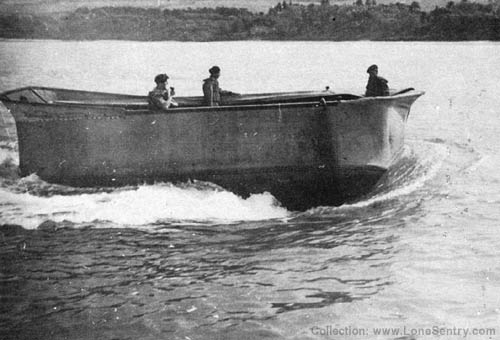
| Midget Submarine X 23 , image found at ibid. |
Wednesday, 4 June 2014
Pegasus Bridge 6th June 1944 Glider Crew 6th Airborne Geoff Barkway & Peter Boyle #Dday #Dday70
Monday, 2 June 2014
Who Were The Royal Navy Commandos? What Did They Do On D-Day? #D-day70
![]() |
| Beach Obstacle With Teller Mine |
![]() |
| L.C.O.C.U frogman training. |
Sunday, 1 June 2014
#D-Day70 #D-Day 6th June 1944 #Operation Neptune was a largely British/Canadian Affair
![]() |
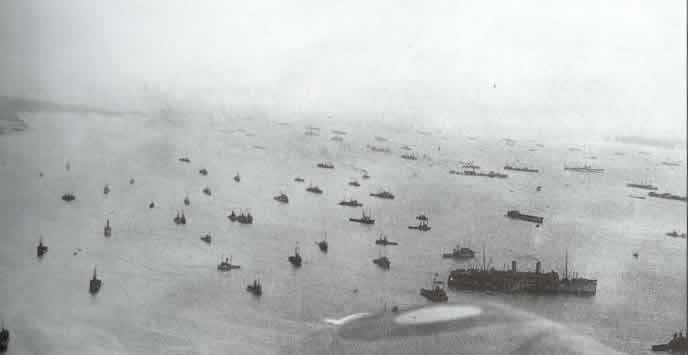
| The D-Day Fleet |
![]() |
| H.M.S Svenner |
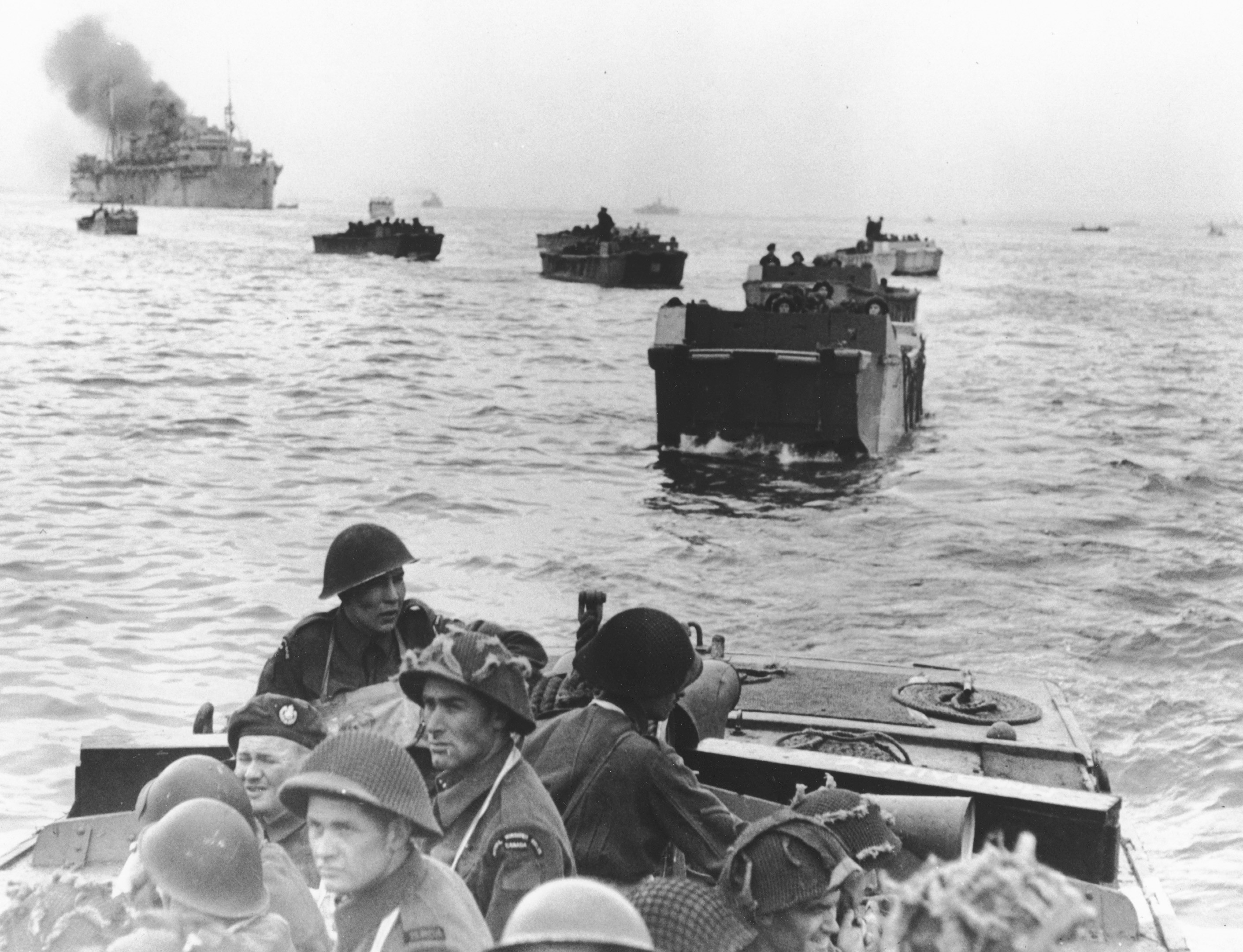
Landing craft were largely made in the United States as the British shipyards were working flat out repairing the existing merchant and war fleets. They were also busy with the Mulberry Harbours. Landing Craft Personnel (LCP) and Landing Craft Vehicle and Personnel (LCVP) were used on D-Day. they were flat bottomed boats, able to get close into the beach and had a ramp at the front of the vessel which came down so men and vehicles could disembark. This was essential so the boat did not have to waste time turning round and reversing into the beach head.
![]() |
| Landing Craft- Canadian Troops At Juno Beach |
Friday, 30 May 2014
#D-Day #Horsa Gliders #DDay70
![]() |
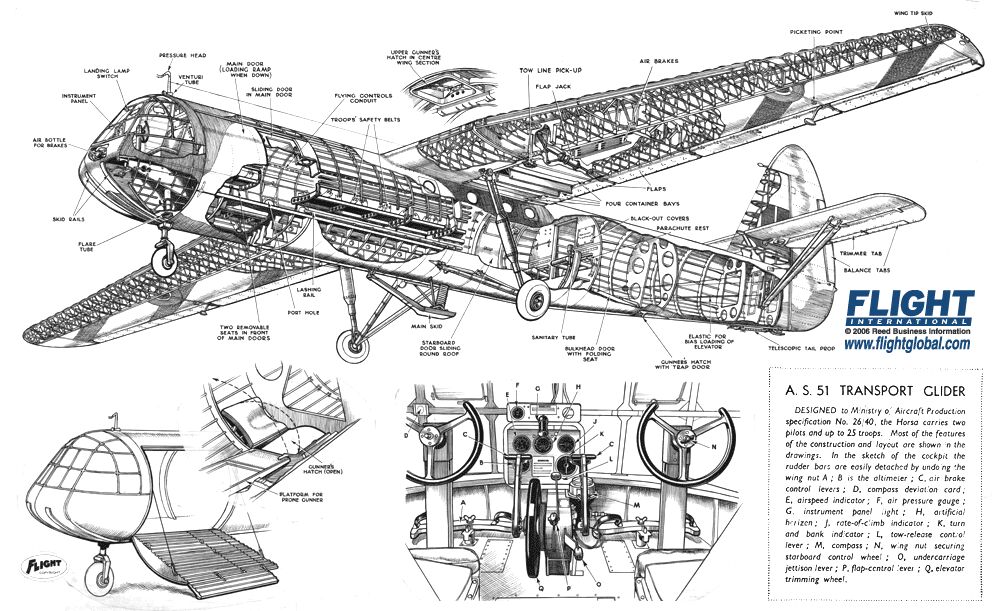
Exploded Image of The Horsa Glider
|
Thursday, 29 May 2014
#DDay70 P.L.U.T.O - Pipeline Under The Ocean
![]() |
| Cross Section Of P.L.U.T.O Pipeline |
Planning for P.L.U.T.O began in 1942, and eventual production and testing encountered many problems, such as kinking, twisting, collapse due to water pressure and other factors.
Each mile of pipe used 24 tons of lead, 7.5 tons of steel tape and 15 tons of steel armour wire and smaller amounts of lighter materials. The external diameter of the pipe was 4.5 inches.Combined Ops Website
![]() |
| Route Of P.L.U.T.O Pipeline |
In all about 500 miles of pipeline were laid in an average laying time over the 30 mile stretch of about 5 hours. In January 1945 the system delivered a disappointing 300 tons but by March this had increased to 3000 tons and later still to 4000 tons. This amounted to over 1,000,000 gallons per day giving a total of 172,000,000 gallons delivered in total up to the end of hostilities. During the operation to lay the cables an HQ ship, several cable ships, tugs, trawlers and barges were employed on this specialised work - a total of 34 vessels with 600 men and officers under Captain J.F.Hutchings.Combined Ops WebsiteMost of the work to manufacture the pipeline was completed in Britain, but due to the volume needed the U.S helped, making a total of 140 tonnes of pipeline out of a total of over 700. D-Day saw much ingenuity, PLUTO was a great idea.
![]() |
| P.L.U.T.O Pumping Stations in 2009. |
Wednesday, 28 May 2014
#WW2 D-Day Hero Co Sgt Major Stanley Hollis - Green Howards Regiment
Stanley Hollis Memorial Website LinkStanley E. Hollis VC 1912 - 1972"The only serviceman to be awarded the Victoria Cross on D-Day June 6, 1944, for his actions at Gold Beach, La Rivière, The Mont Fleury Battery and Crépon, during the Normandy Invasion of Europe."An immensely brave and modest family man, born at Archibald Street, Middlesbrough, on September 21, 1912.Stanley E. Hollis VC 1912 - 1972 "The only serviceman to be awarded the Victoria Cross on D-Day June 6, 1944, for his actions at Gold Beach, La Rivière, The Mont Fleury Battery and Crépon, during the Normandy Invasion of Europe. "An immensely brave and modest family man, born at Archibald Street, Middlesbrough, on September 21, 1912. "A never-to-be-forgotten leader, protector and inspiration to his comrades." © Mike Morgan, author of the authorised biography "D-Day Hero: CSM Stanley Hollis VC""A never-to-be-forgotten leader, protector and inspiration to his comrades."© Mike Morgan, author of the authorised biography "D-Day Hero: CSM Stanley Hollis VC"
Stanley Hollis was a Co Sgt Major of 6th Battalion Green Howards, a northern regiment. He won the only V.C awarded for his actions on D-Day. Read the full story here: http://www.flamesofwar.com/hobby.aspx?art_id=286
There is an excellent BBC Tees Interview and documentary about Stan Hollis, you can find it here: http://www.bbc.co.uk/programmes/p020gt21
#D-Day 6th June 1944 More Of Hobart's Funnies
Last night I forgot to mention a couple of Hobart's inventions created for D-Day.
The AVRE was an armoured bulldozer, useful for pushing obstacles aside and also for Engineers to shelter behind.
There was also a bridge laying tank, again a Churchill:
![]() |
| Churchill Bridge Laying Tank |
There was no need for Royal Engineers to spend hours building a bailey bridge under fire when they had these, they were ideal for crossing narrow rivers.
To summarise, These were British inventions, not American. Sometimes the British used American kit and improved it for different scenarios such as the DD swimming tank and the Sherman fitted with a 17pdr gun.
I can't help but scratch my head as to why General Bradley didn't adopt these tanks in larger numbers, even if only for D-Day instead of relying on frontal assaults by engineers and infantry. they may have saved many lives.
Tuesday, 27 May 2014
D-day 6th June 1944 - Hobart's Funnies
So its up to the rest of us amateur historians, writers and professionals to put this right. I am going to try and publish a page on my blog every day until 6th June 2014 about D-Day and I am starting with the infamous 'Hobart's Funnies'.
![]() |
| Major General Sir Percy Hobart http://www.historylearningsite.co.uk/fileadmin/historyLearningSite/genera4.jpg |
Major-General Sir Percy Hobart was one of the many characters in World War 2 that were eccentric. Hobart's ideas about armoured weaponry were so ahead of their time in the 1930's that he was largely confined to a desk and an early retirement (Neillands, De Normann p.51).By 1940 Hobart had been relieved of his post in the 7th Armoured in Egypt and was serving as a Corporal in the Home Guard(Neillands, De Normann p.52). Winston Churchill intervened recognising Hobart's technical genius and reassigned him to the 79th Division which consisted of modified armour especially developed for use on D-Day.
The Bobbin was a modified Churchill tank that laid down a road over quicksand for other vehicles to follow.
http://www.thinkdefence.co.uk/wp-content/uploads/2014/05/Churchill-Assault-Vehicle-Royal-Engineers-AVRE-equipped-with-the-Type-C-Mk-2-Bobbin-track-laying-device.jpg
They were useful at Gold Beach laying 4 lanes over soft sand for other vehicles to follow, without these bobbin tanks vehicles would not have advanced inland.
| Petard crew with a 'dustbin'. |
![]() |
| Crocodile Flamethrower |
![]() |
| D-D tank full steam ahead. |
![]() |
| Flail tank. |
![]() |
| Facine obstacle clearing. |
Bibliography
Neillands,R, De Normann, R, D-Day 1944, Voices From Normandy, London (1993).
Ambrose, S, D-Day, U.S.A (1994).
Saturday, 25 June 2011
D-Day
(Image found at: http://www.normandy-france.net/D-Day/D-day.12.jpg , accessed 25/6/11.)
6th June 1944 witnessed the biggest invasion fleet in history. Soldiers, marines, sailors all landed by sea, glider and parachute in Normandy, France. I never cease at the enormity of the task that the Allied forces undertook to free mainland Europe from the Axis powers,primarily the Germans. Perhaps more accurately, troops wearing German uniforms, as the Germans had recruited Ukrainians, Turks, Poles and Georgians to name but a few.
The first troops to land in Normandy were glider borne soldiers of the British 6th Airborne, led by Major John Howard. Their task was to land by the Orne and Dives rivers, then capture and hold 2 bridges to protect the West flank of the invasion. They were closely followed by paratroopers of the British airborne who would capture and put out of action a battery of guns at Merville. The American and Canadian paratroopers also landed on the Contentin Peninsular and in the area near Juno beach.
What can't be beaten is a good read, try these:
Books
Ambrose, S.E, D-Day June 6th, 1944 The Battle For The Normandy Beaches. (2002).
Beevor, A, D-Day The Battle For Normandy, (2009).
Hastings, M, Overlord, (1999).
Neillands, R & De Normann, R, D-Day 1944 Voices From Normandy, (1994).
Websites
http://www.dday.co.uk/
http://www.6juin1944.com/
http://www.bbc.co.uk/history/worldwars/wwtwo/dday_beachhead_01.shtml


.jpg)