Showing posts with label Juno beach. Show all posts

Sunday, 8 June 2014

D-Day- What Did It Achieve? #Dday70 #Dday

Royal Marines at Pegasus Bridge, image found at: 
http://www.military-art.com/mall/images/dhm1394.jpg

This question could be really simple to answer without going into great detail. Firstly Operation Overlord was the stepping stone the Allies needed to defeat Germany. They had to invade mainland Europe somewhere other than Italy, which turned out to be a tough old gut rather than the soft underbelly of Europe.
Caen was an objective which was supposed to have been taken on D-Day itself, but maybe it was an over ambitious objective? The British advanced from Sword Beach to 5km from Caen, they had landed 29,000 men and taken many prisoners. By noon the Juno, Sword and Gold beaches were consolidated into one large bridgehead. The British 6th Airborne had held onto Pegasus Bridge and the bridge at the River Orne and were relieved by Lord Lovat's Royal Marines. U.S paratroopers had caused havoc behind enemy lines even if most were dropped in the wrong areas. At Omaha beach, the Americans had encountered fierce opposition (352nd Infantry Division) and large numbers of beach obstacles and were nearly evacuated back onto the ships. At Utah Beach the American troops realised they had been  landed in the wrong place, but took advantage of  lighter opposition and made good progress inland. 

Carentan, St Lo and Bayeux were objectives which were not captured on D-day, but the Allies were able to consolidate their foothold in France and land more men, vehicles and supplies on the beaches and by using the Mulberry Harbours. What did D-Day achieve? It helped end the war in Europe in less than 12 months from the 6th  June 1944. We should not forget the sacrifice these people made.

Sunday, 1 June 2014

#D-Day70 #D-Day 6th June 1944 #Operation Neptune was a largely British/Canadian Affair


Operation Neptune was the planning for the seaborne invasion of Normandy 6th June 1944. Over 70% of all naval craft which took part belonged either to the Royal or Canadian Navies. The rest came from the United States, Free French Dutch or Norwegian navies.
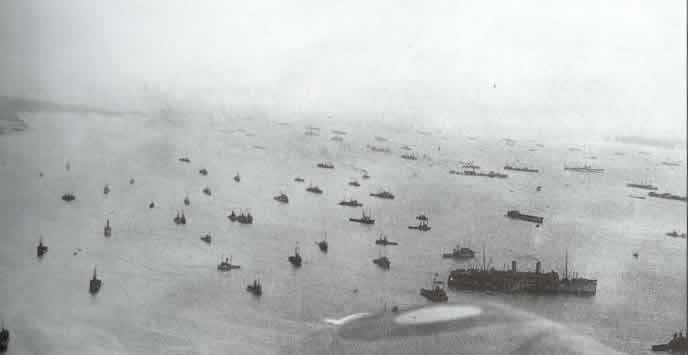
Over 5300 vessels took part. 57 British Destroyers, 30 American destroyers, and others from Norwegian, Dutch, French navies including HMS Svenner. 4126 landing craft and ships, 2 midget submarines, 736 ancillary vessels, 864 merchant ships and 189 minesweepers made up the bulk of the fleet. 
The Royal Navy provided some heavy firepower including 6 battleships, 2 monitors and 16 cruisers. The U.S Navy sent 3 cruisers and 3 battleships.H.M.S Belfast fired the first shell on D-Day. Imagine waking up in a bunker and looking out of the observation slit and seeing this lot?

The D-Day Fleet

H.M.S Svenner


Read; D-Day 1944 Voices From Normandy, Neillands, R& De Normann, R.


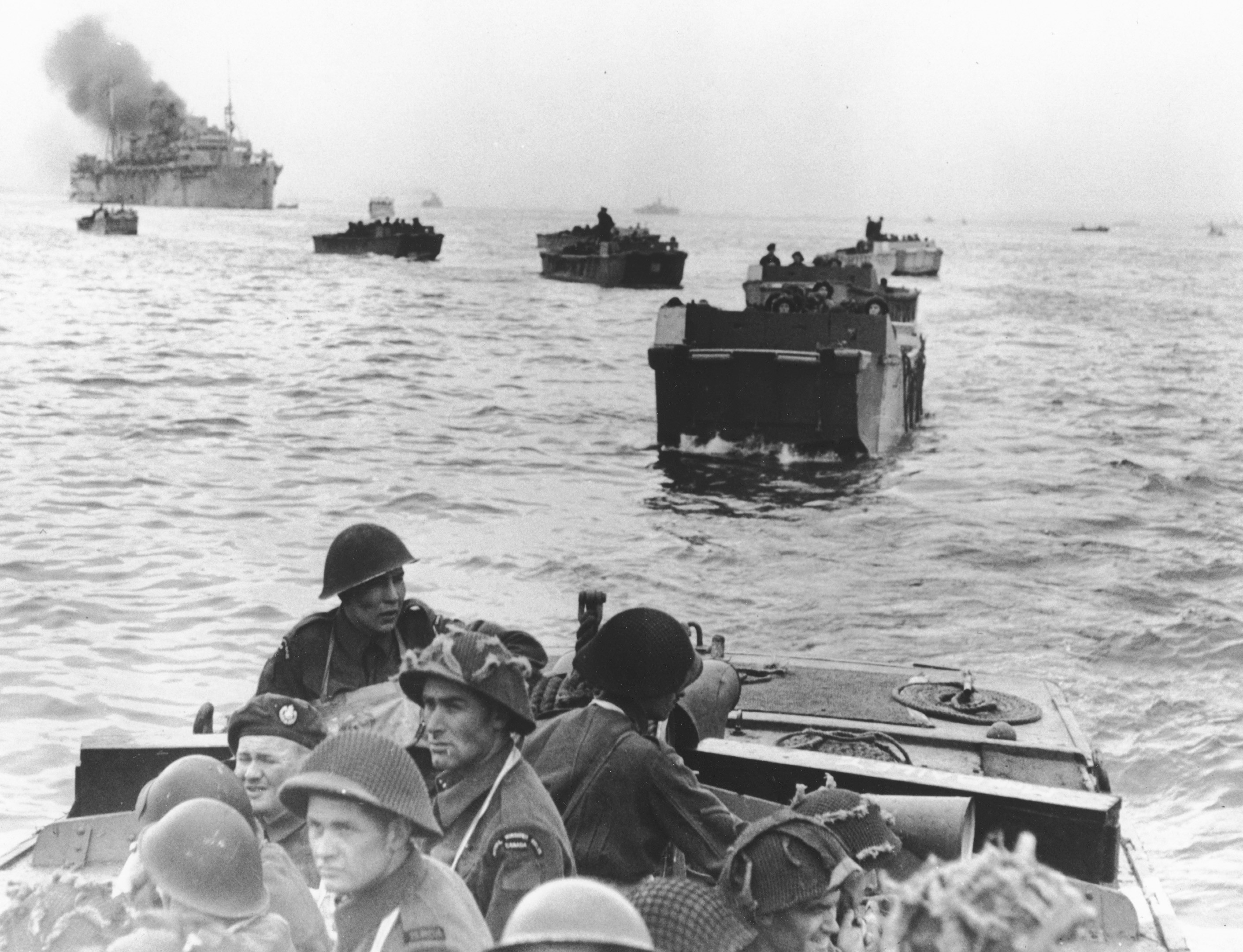
Landing craft were largely made in the United States as the British shipyards were working flat out repairing the existing merchant and war fleets. They were also busy with the Mulberry Harbours.  Landing Craft Personnel (LCP) and Landing Craft Vehicle and Personnel (LCVP) were used on D-Day. they were flat bottomed boats, able to get close into the beach and had a ramp at the front of the vessel which came down so men and vehicles could disembark. This was essential so the boat did not have to waste time turning round and reversing into the beach head.
Landing Craft- Canadian Troops At Juno Beach