
Showing posts with label blitz. Show all posts
Showing posts with label blitz. Show all posts
Sunday, 5 April 2015
#WW2 World War 2 Blitz - Kingston Upon Hull Bomb Damage
It is surprising how many people are unaware of how widespread the bombing was in Britain during World War 2. London, Liverpool and Coventry are well publicised, but Hull suffered heavy bombing as it was on the East coast - any German bombers unable to reach their targets often dropped them here.


Thursday, 5 March 2015
#WW2 Air Raid Shelters In Britain Used In The Second World War
 |
| Anderson Shelter diagram found at:http://www.bigginhill-history.co.uk/images/andersonpicture.JPG. |
When you talk about air raid shelters, most people envisage the infamous Anderson shelter which was popular. Named after Sir John Anderson who was Home Secretary during the Battle of Britain, 1.5 million were distributed leading up to the war, and by 1945 3.6 million had been made http://www.rafmuseum.org.uk/research/online-exhibitions/history-of-the-battle-of-britain/air-raid-shelter-protection.aspx. It was constructed of corrugated iron,partially underground and the roof and walls were covered in soil. They were often damp but did provide some cover against bombs, although they could not withstand a direct hit. The public either bought them from the government or they were free depending on how much people earned - if you earned more than £5 per week you could buy one for £7. The Anderson shelter could accommodate up to 6 people.
 |
| Family entering Anderson shelter.
Another type which was hugely successful was the Morrison shelter, named after the Home Secretary, Herbert Morrison. This was a basic design which was really just an iron cage which could fit under the kitchen table, ideal if you did not have a garden. These became available in 1941. http://www.1900s.org.uk/1940s-bomb-shelters-morrison.htm. It would not have been able to hold 6 people like the Anderson shelter but at least you could get in it quickly when the air raid siren went.
 The London Tube provided a great deal of shelter during the blitz, as did other public shelters in towns and cities. 
The entrance to a public shelter was marked with a large S Sign, they were constructed of brick and were not bomb proof, but they were blast proof.

Air raid shelters saved many lives during the Second World War. Without them the casualties from air raids would have been horrific.
|
Friday, 20 February 2015
#WW2 The Role Of The Air Raid Warden, Or Air Raid Patrol In The Second World War
Most people who enjoy watching the repeats of Dad's Army on #BBC2 on Saturdays, will probably have an image in their minds that the ARP or Air raid Warden in World War 2, was something of a pest, somebody like the character Hodges who let the power go to his head, ordering people about. In some cases this might have been true (Hodges was based on a real Air Raid Warden) but the Air Raid Warden was an authority figure the government could not do without, they had to make sure the blackout regulations were adhered to.
In the hours of darkness the A.R.W had to make sure homes were blacked out - not showing any light from their homes whatsoever. This was to make the Luftwaffe's bombing less accurate. After bombing raids Air Raid Wardens helped dig out survivors. Air Raid Wardens also issued fines if regulations weren't followed, this did not make them popular but was a necessary deterrent. In exceptional cases people could be imprisoned.
The video below shows what the Blitz was like in British cities during the war.
Thursday, 12 February 2015
Air Raid Sirens In The Second World War
Probably the first thing most people heard after Chamberlain's famous speech on the outbreak of war in September 1939 was the air raid siren. This was an essential piece of kit used to warn both the military and civilians of the threat of enemy aircraft and bombing.Two tones were used; Red Alert which meant imminent attack and the All Clear which meant it was safe to leave your shelter (if you were lucky enough to have one/find one).
Some were hand cranked:
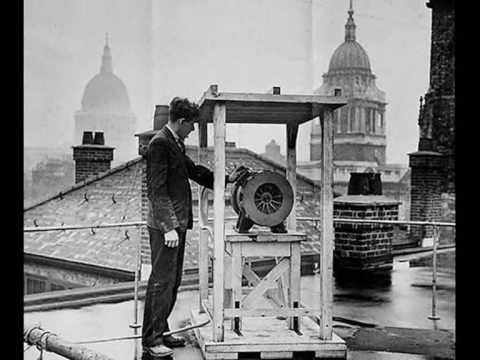 |
| Image found at: http://i1.ytimg.com/vi/9i1QAtET0ok/hqdefault.jpg |

Image found at:http://www.sutton-coldfield.net/ww2/air%20raid%20siren.jpg
The only information about who manufactured them is on this page about the blitz in Liverpool: Liverpool Blitz - the sound of the air raid siren. It says that Gents of Leicestershire made the sirens that were used in Britain throughout the war. Below is an excellent extract from a 1939 film, The Warning, courtesy of BFI.
Friday, 9 January 2015
Remember The Liverpool Blitz January 9th 1941
 |
| Lord St, Liverpool, found at:http://liverpoolblitz70.co.uk/wp-content/uploads/2011/03/lord-street-blitz-1.jpg |

Subscribe to:
Posts (Atom)