This is an excellent excerpt from BBC News 2004 telling the story of 2 glider crew Geoff barkway & peter Boyle who landed their Horsa glider at Pegasus Bridge Benouville.

Showing posts with label Horsa Gliders. Show all posts
Showing posts with label Horsa Gliders. Show all posts
Wednesday, 4 June 2014


Friday, 30 May 2014
#D-Day #Horsa Gliders #DDay70
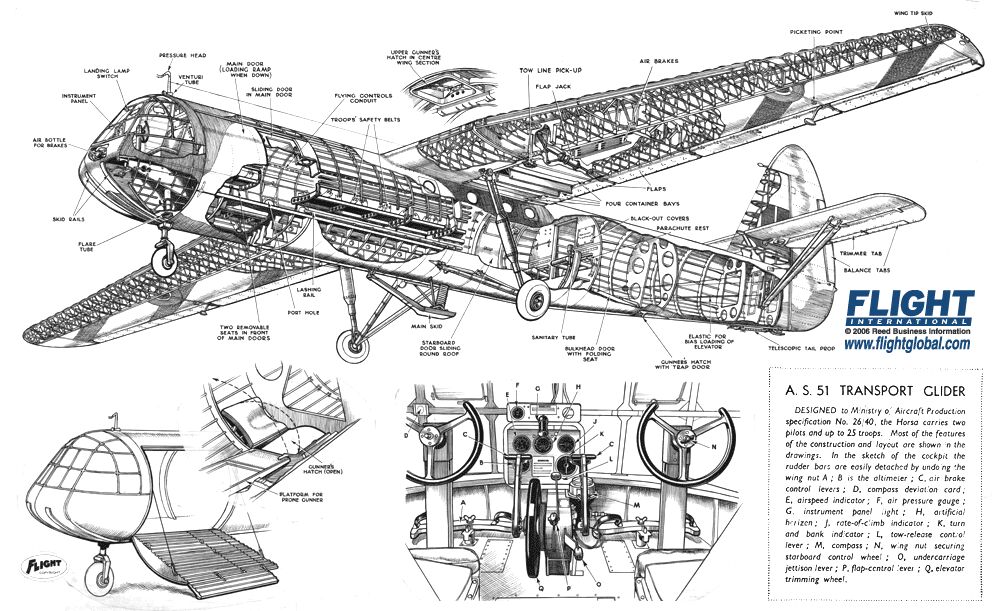 |
Exploded Image of The Horsa Glider
|
The Horsa glider is infamous for its role in airborne operations in the Second World War. Gliders were very useful as they created very little noise after they had been released from their tug plane.It could carry up to 25 troops with their equipment MilitaryFactory.com. The first time they were used in any numbers was the invasion of Sicily in 1943, many were released by tug aircraft too soon and crashed into the sea armyflying.com. The most successful operation was the capture of the 2 bridges in Normandy in the early hours of the 6th June 1944 - D-Day.(Please see previous entry on this post). Over 600 gliders were used in Operation Market Garden landing troops near Arnhem, and 400 in Operation Husky when the Allies crossed the Rhine.ArmyFlying.com.
Please see the Assault Glider trust Website where they are restoring a Horsa, loads of pictures and content. Assaultglidertrust
Thursday, 29 May 2014
#D-Day70 6th June 1944 Airborne Troops
There won't be many people who have not heard of Stephen Ambrose or Band of Brothers - the excellent book he wrote about Easy Company of the 101st U.S Airborne Regt, which was adapted for television. One of the best Christmas presents I ever received from my other half was the box set of Band of Brothers, available at http://amazon.co.uk and other good outlets. I'm not solely writing about U.S involvement on D-Day, the common view is that there is so much publicity about American involvement that they forgot that it was also British, Commonwealth and Allied European troops who took part in the fighting.
There are plenty of excellent books out there, in particular I do enjoy reading Pegasus Bridge by Ambrose, which goes into detail about the British 6th Airborne. It's origins, training, the people who took part, the landings and action after D-Day. These men were tough. They had to be. Howard during training like the rest of D Company marched the men from Devonshire to Bulford, 130 miles in 1942. (Ambrose, p.p 35,36).
They trained at night and slept during daylight hours, this was unheard of at the time, but because of good training, on D-day itself 6th Airborne successfully captured the 2 bridges over the River Orne at Ranville and the canal bridge at Benouville (later called Pegasus Bridge). Taken to their destination in towed Horse gliders, the glider pilot training also paid off, landing with pin point accuracy next to the bridges and not in the canal or river. The bridges would be held until relieved, as they were vital for the allied advance inland on the outskirts of Caen.

British Paratroopers also took part in the battle in the early hours of the 6th June 1944. the Merville Battery was a target as it covered the coast, in particular Sword Beach http://www.bbc.co.uk/history/worldwars/wwtwo/dday_beachhead_01.shtml. Like most Paratroopers on D-Day, most were scattered over a wide area considerable distances from their objectives. To attack the battery Lt-Col Otway could only muster around 150 men, instead of 650 (See this link on the BBC History Website :http://www.bbc.co.uk/history/worldwars/wwtwo/dday_audio_04.shtml .The battery had to be taken before the seaborne landings took place, Otway had to attack as planned. The Paras went ahead, won the battle capturing around 30 Germans.
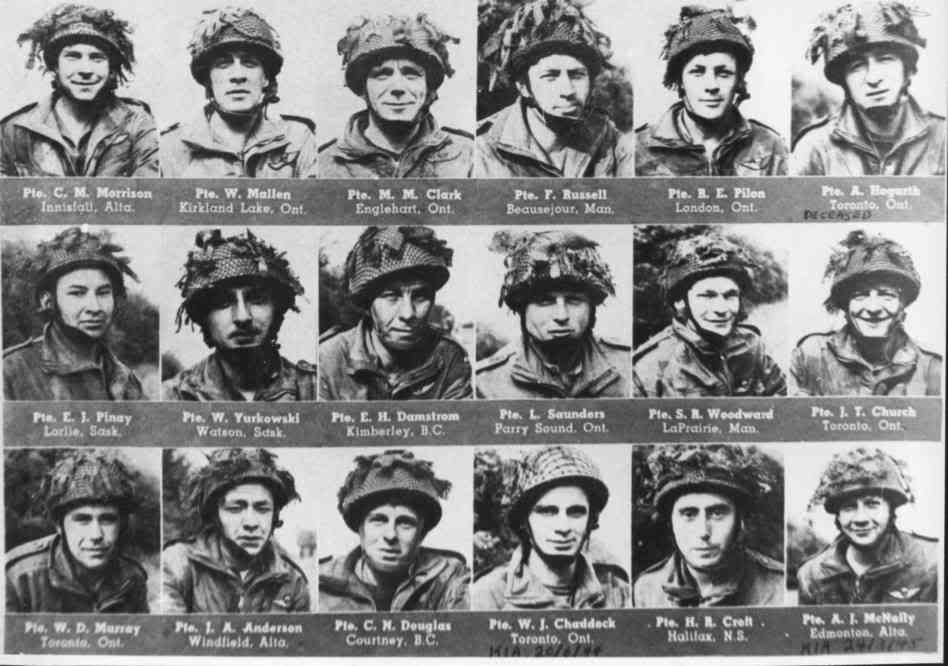
Canadian paratroops also deserve a mention. The 1st Canadian Parachute Battalion was part of the 21st Army Group and their objectives included; securing Drop Zone V by destroying a German HQ, destroying bridges at Robehomme and Varaville, providing cover to the British 9th battalion at Merville and securing high ground at Le Mesnil Crossroads http://www.magma.ca/~canpara/history.html#set_3.
Bibliography
Ambrose, S, Pegasus Bridge.
Neillands, R, De Normann, R, D-Day 1944 Voices From Normandy.
There are plenty of excellent books out there, in particular I do enjoy reading Pegasus Bridge by Ambrose, which goes into detail about the British 6th Airborne. It's origins, training, the people who took part, the landings and action after D-Day. These men were tough. They had to be. Howard during training like the rest of D Company marched the men from Devonshire to Bulford, 130 miles in 1942. (Ambrose, p.p 35,36).
They trained at night and slept during daylight hours, this was unheard of at the time, but because of good training, on D-day itself 6th Airborne successfully captured the 2 bridges over the River Orne at Ranville and the canal bridge at Benouville (later called Pegasus Bridge). Taken to their destination in towed Horse gliders, the glider pilot training also paid off, landing with pin point accuracy next to the bridges and not in the canal or river. The bridges would be held until relieved, as they were vital for the allied advance inland on the outskirts of Caen.
British Paratroopers also took part in the battle in the early hours of the 6th June 1944. the Merville Battery was a target as it covered the coast, in particular Sword Beach http://www.bbc.co.uk/history/worldwars/wwtwo/dday_beachhead_01.shtml. Like most Paratroopers on D-Day, most were scattered over a wide area considerable distances from their objectives. To attack the battery Lt-Col Otway could only muster around 150 men, instead of 650 (See this link on the BBC History Website :http://www.bbc.co.uk/history/worldwars/wwtwo/dday_audio_04.shtml .The battery had to be taken before the seaborne landings took place, Otway had to attack as planned. The Paras went ahead, won the battle capturing around 30 Germans.
 |
| Plan Of Attack of Merville Battery |
 |
| Observation Photograph Of Merville |
Canadian paratroops also deserve a mention. The 1st Canadian Parachute Battalion was part of the 21st Army Group and their objectives included; securing Drop Zone V by destroying a German HQ, destroying bridges at Robehomme and Varaville, providing cover to the British 9th battalion at Merville and securing high ground at Le Mesnil Crossroads http://www.magma.ca/~canpara/history.html#set_3.
Bibliography
Ambrose, S, Pegasus Bridge.
Neillands, R, De Normann, R, D-Day 1944 Voices From Normandy.
Subscribe to:
Posts (Atom)