Showing posts with label Operation Neptune. Show all posts

Thursday, 5 June 2014

Midget Submarines On D-Day #dday70 #dday

Midget Submarine X 23 alongside H.M.S Largs , image from: 
http://assets.dday7.channel4.com/images/timeline1024/4026-x23-alongside-hmslargs.jpg

Midget submarines played a vital part as any other naval craft on D-Day. Their task was to lie up off the Normandy coast on 4th June 1944 during the day, then surface at night. In the early hours of 5th June 1944 2 midget submarines surfaced only to receive a radio signal that the invasion was postponed due to bad weather. They had to dive and lie up for another day. They resurfaced on 6th June 1944 and set up their green signal beacons, which were 18ft high and shone a green light, visible to seaward but not from land.  When the invasion fleet arrived they took the beacons down and erected signal flags. 
Midget Submarine X 23 , image found at ibid.

The use of these submarines were essential so that the troops landing landed in the correct place. During Operation Torch, some landing craft had hit a false beach, landed vehicles and men into the sea who then drowned. It was important, especially with a massive fleet used on D-Day that this was not repeated.
There is some useful info on this on the Royal Submarine Website .


Sunday, 1 June 2014

#D-Day70 #D-Day 6th June 1944 #Operation Neptune was a largely British/Canadian Affair


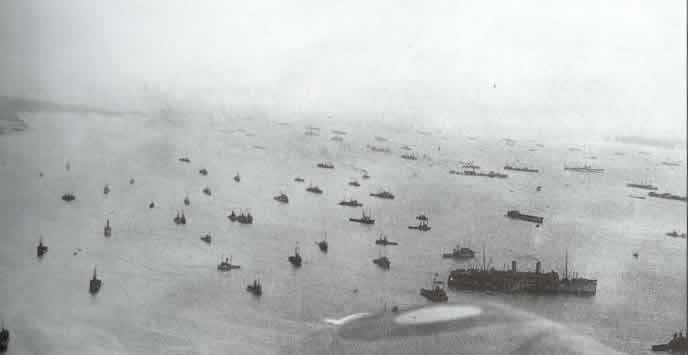
Operation Neptune was the planning for the seaborne invasion of Normandy 6th June 1944. Over 70% of all naval craft which took part belonged either to the Royal or Canadian Navies. The rest came from the United States, Free French Dutch or Norwegian navies.
Over 5300 vessels took part. 57 British Destroyers, 30 American destroyers, and others from Norwegian, Dutch, French navies including HMS Svenner. 4126 landing craft and ships, 2 midget submarines, 736 ancillary vessels, 864 merchant ships and 189 minesweepers made up the bulk of the fleet. 
The Royal Navy provided some heavy firepower including 6 battleships, 2 monitors and 16 cruisers. The U.S Navy sent 3 cruisers and 3 battleships.H.M.S Belfast fired the first shell on D-Day. Imagine waking up in a bunker and looking out of the observation slit and seeing this lot?

The D-Day Fleet

H.M.S Svenner


Read; D-Day 1944 Voices From Normandy, Neillands, R& De Normann, R.


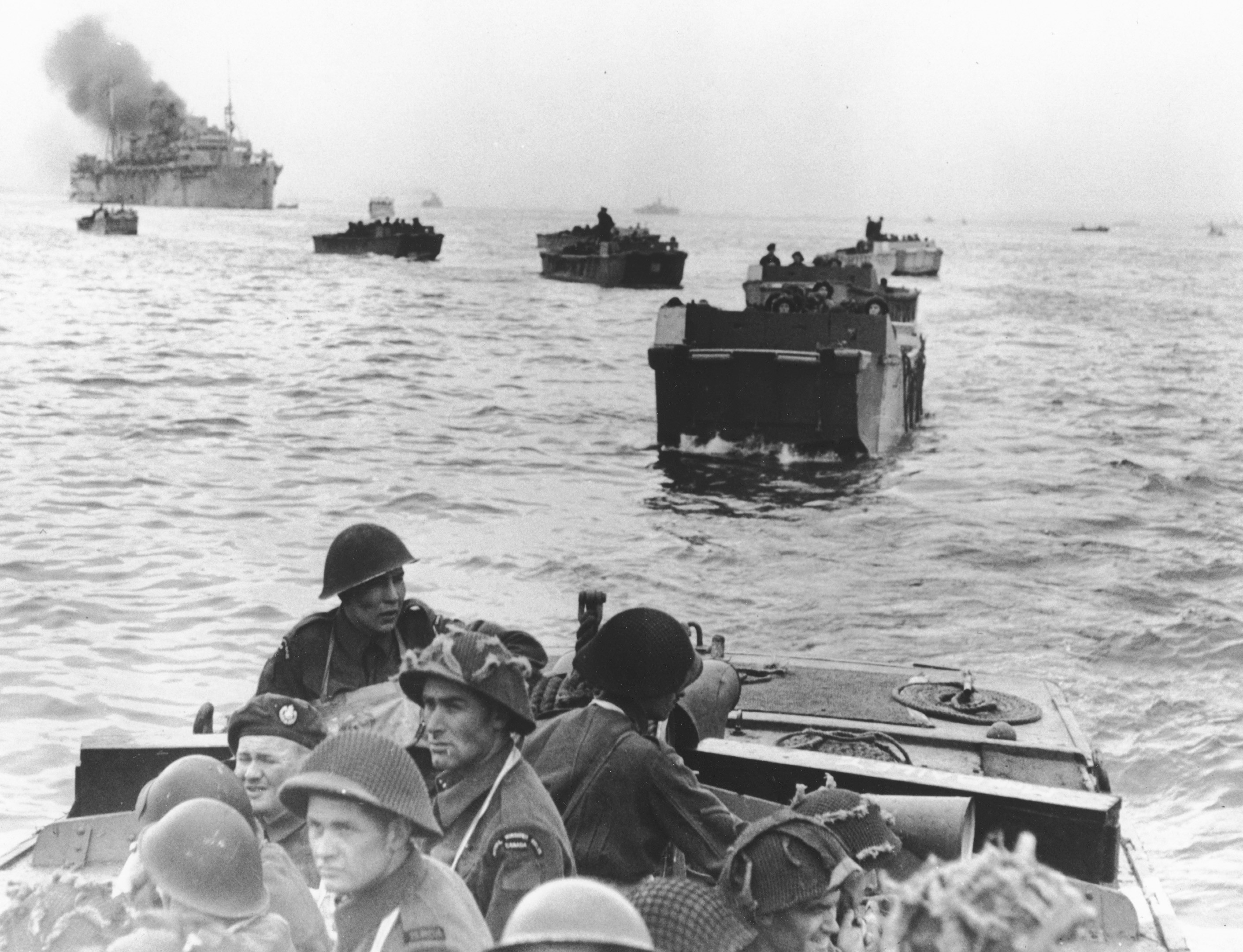
Landing craft were largely made in the United States as the British shipyards were working flat out repairing the existing merchant and war fleets. They were also busy with the Mulberry Harbours.  Landing Craft Personnel (LCP) and Landing Craft Vehicle and Personnel (LCVP) were used on D-Day. they were flat bottomed boats, able to get close into the beach and had a ramp at the front of the vessel which came down so men and vehicles could disembark. This was essential so the boat did not have to waste time turning round and reversing into the beach head.
Landing Craft- Canadian Troops At Juno Beach