Showing posts with label operation overlord. Show all posts

Sunday, 8 June 2014

D-Day- What Did It Achieve? #Dday70 #Dday

Royal Marines at Pegasus Bridge, image found at: 
http://www.military-art.com/mall/images/dhm1394.jpg

This question could be really simple to answer without going into great detail. Firstly Operation Overlord was the stepping stone the Allies needed to defeat Germany. They had to invade mainland Europe somewhere other than Italy, which turned out to be a tough old gut rather than the soft underbelly of Europe.
Caen was an objective which was supposed to have been taken on D-Day itself, but maybe it was an over ambitious objective? The British advanced from Sword Beach to 5km from Caen, they had landed 29,000 men and taken many prisoners. By noon the Juno, Sword and Gold beaches were consolidated into one large bridgehead. The British 6th Airborne had held onto Pegasus Bridge and the bridge at the River Orne and were relieved by Lord Lovat's Royal Marines. U.S paratroopers had caused havoc behind enemy lines even if most were dropped in the wrong areas. At Omaha beach, the Americans had encountered fierce opposition (352nd Infantry Division) and large numbers of beach obstacles and were nearly evacuated back onto the ships. At Utah Beach the American troops realised they had been  landed in the wrong place, but took advantage of  lighter opposition and made good progress inland. 

Carentan, St Lo and Bayeux were objectives which were not captured on D-day, but the Allies were able to consolidate their foothold in France and land more men, vehicles and supplies on the beaches and by using the Mulberry Harbours. What did D-Day achieve? It helped end the war in Europe in less than 12 months from the 6th  June 1944. We should not forget the sacrifice these people made.

Thursday, 5 June 2014

Waiting.... Would D-Day Be Cancelled Again? #Dday70 #DDay

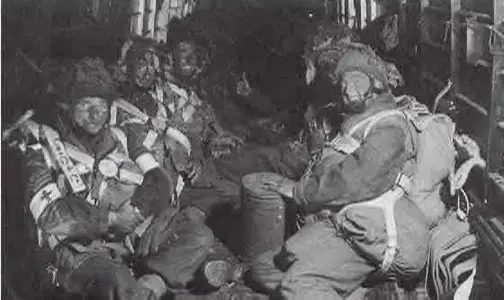
British Paratroopers Operation Overlord found at: http://www.dday-overlord.com/img/para/gbbritanniques_interieur.jpgca/parachutistes_
The troops waited. They waited in the ports in England. They waited at the airfields. Tonight D-Day was not cancelled. Tonight they went. Even if you are a pacifist please have some respect for those who sacrificed themselves for the liberty of others and the liberty of future generations.Italy had been invaded in 1943, but the invasion of France in 1944 was the path to victory that the Allied armies would follow.

Midget Submarines On D-Day #dday70 #dday

Midget Submarine X 23 alongside H.M.S Largs , image from: 
http://assets.dday7.channel4.com/images/timeline1024/4026-x23-alongside-hmslargs.jpg

Midget submarines played a vital part as any other naval craft on D-Day. Their task was to lie up off the Normandy coast on 4th June 1944 during the day, then surface at night. In the early hours of 5th June 1944 2 midget submarines surfaced only to receive a radio signal that the invasion was postponed due to bad weather. They had to dive and lie up for another day. They resurfaced on 6th June 1944 and set up their green signal beacons, which were 18ft high and shone a green light, visible to seaward but not from land.  When the invasion fleet arrived they took the beacons down and erected signal flags. 
Midget Submarine X 23 , image found at ibid.

The use of these submarines were essential so that the troops landing landed in the correct place. During Operation Torch, some landing craft had hit a false beach, landed vehicles and men into the sea who then drowned. It was important, especially with a massive fleet used on D-Day that this was not repeated.
There is some useful info on this on the Royal Submarine Website .


Monday, 2 June 2014

Who Were The Royal Navy Commandos? What Did They Do On D-Day? #D-day70

A few years ago at the World War 2 Weekend in Northallerton, I came across a branch of the Royal Navy I never even knew existed. Royal Navy Commandos. 

They had taken part in all major operations including Dieppe and Italy. Their tasks were many and varied but always dangerous. One really dangerous task was the L.C.O.C.U - Landing Craft Obstacle Clearance Units. Basically their job was to go underwater, attach explosive charges to the teller mines which were on the beach obstacles, and when they had run out of explosives either make their way to the beach, or back to their boat. 
Beach Obstacle With Teller Mine 

Able Seaman Andrew Henderson was part of a unit which exploded around 100 mines. They had enough  oxygen for one hour and an emergency supply which would last 10 minutes.(Lee, p32).
L.C.O.C.U frogman training.

I was surprised to find out in Beachhead Assault  - The Story Of the Royal Naval Commandos In World War 2 by David Lee, that these commandos were present at Pegasus Bridge with the 6th Airborne. Wilf Fortune was a telegraphist with a Forward Observer Bombardment Party (FOB). He dropped into Normandy by parachute in the Ranville area with Captain Vere Hodge, and Leading Telegraphist Alex Bloomer. They made their way to Pegasus Bridge and set up their wireless set and were able to direct fire from a ship to prevent  German counter-attack. (Lee, p.p 134-138).    

Royal naval Commandos were also responsible for directing the traffic inland from the beach, no unenviable task. They did a good job, sorting out the traffic congestion and getting the wreckage moved out of the way. 

Read: Beachhead Assault  - The Story Of the Royal Naval Commandos In World War 2(2004) by David Lee.(London).