Until 1945, the USAAF bravely bombed Axis targets in daylight, often unescorted. The Schweinfurt - Regensburg raid is infamous in August 1943 for the heavy losses inflicted on the B17's. 60 aircraft were los as were a total of 55 crews taken prisoner, interned in Switzerland or killed. http://militaryhistory.about.com/od/aerialcampaigns/p/regensburg.htm
The plan was to have 2 bomber groups with 10 minutes between them taking off from bases in Britain. The first group would meet expected Luftwaffe fighters on the Regensburg raid, the target there was the Messerschmidt factory. Wile these fighters were refuelling the second wave would bomb the ball bearing factories at Schweinfurt. Both USAAF groups would land in North Africa. http://www.historyandheadlines.com/august-17-1943-us-8th-air-force-loses-60-b-17-bombers-raid-schweinfurt-regensburg/
Unfortunately, bad weather meant the second wave was delayed, the Luftwaffe had time to re-arm and refuel,the disastrous day for the USAAF became known as 'Black Thursday'. The development of the P-51 and Lightning fighters, meant that by March 1944, Allied bombers had protection to and from the target in Germany.http://www.nationalmuseum.af.mil/factsheets/factsheet.asp?id=513
It is surprising how many people are unaware of how widespread the bombing was in Britain during World War 2. London, Liverpool and Coventry are well publicised, but Hull suffered heavy bombing as it was on the East coast - any German bombers unable to reach their targets often dropped them here.
There has been much discussion on #Twitter recently regarding the video above. I could not believe something horse drawn could operate a combine harvester, but watch this and you will see I was wrong. There is also some good footage from the U.S of a Caterpillar operated combine and a steam operated threshing machine.
George Formby was a very popular entertainer in Britain, and he loved entertaining the troops. He was Britain's highest paid entertainer, by 1939 he was earning £100,000 per year. During the Second World War he, like Vera Lynn Gracie Fields and others, joined E.N.S.A. This stood for Entertainments National Servicemen Association (not as Spike Milligan stated in his memoirs Every Night Something Awful). He was famous for his banjo and ukelele playing and the infamous 'When I'm cleaning windows'. It was estimated that he had played to over three million troops by 1946.
You can find out more here: http://www.georgeformby.co.uk/gf_story/report.html
Anderson Shelter diagram found at:http://www.bigginhill-history.co.uk/images/andersonpicture.JPG.
When you talk about air raid shelters, most people envisage the infamous Anderson shelter which was popular. Named after Sir John Anderson who was Home Secretary during the Battle of Britain, 1.5 million were distributed leading up to the war, and by 1945 3.6 million had been made http://www.rafmuseum.org.uk/research/online-exhibitions/history-of-the-battle-of-britain/air-raid-shelter-protection.aspx. It was constructed of corrugated iron,partially underground and the roof and walls were covered in soil. They were often damp but did provide some cover against bombs, although they could not withstand a direct hit. The public either bought them from the government or they were free depending on how much people earned - if you earned more than £5 per week you could buy one for £7. The Anderson shelter could accommodate up to 6 people.
Family entering Anderson shelter.
Another type which was hugely successful was the Morrison shelter, named after the Home Secretary, Herbert Morrison. This was a basic design which was really just an iron cage which could fit under the kitchen table, ideal if you did not have a garden. These became available in 1941. http://www.1900s.org.uk/1940s-bomb-shelters-morrison.htm. It would not have been able to hold 6 people like the Anderson shelter but at least you could get in it quickly when the air raid siren went.
The London Tube provided a great deal of shelter during the blitz, as did other public shelters in towns and cities.
The entrance to a public shelter was marked with a large S Sign, they were constructed of brick and were not bomb proof, but they were blast proof.
Air raid shelters saved many lives during the Second World War. Without them the casualties from air raids would have been horrific.
Living next to any military base in the Second World War had many advantages, especially if you were young. My father often used to tell me he'd scrounge big tins of black treacle from a nearby base to take home for his Mother, this will have been greatly appreciated due to sugar being rationed.
The Americans were generous to the locals, Harry Willoughby in Wing & A Prayer writes that at his base they threw a big party for 150 children. They also held regular dances at many bases which proved popular...
If you were female and looking for a potential husband then you would be spoilt for choice, Americans were popular due to their higher rate of pay and being available, unlike many British soldiers who were in North Africa. Over 60,000 women would marry U.S servicemen and emigrate during the Second World War http://www.nww2m.com/2012/01/january-26-1942-american-soldiers-arrive-in-great-britain/
It was not all a romantic haven in Britain, even after war in Europe had ended. Canadian soldiers rioted in Aldershot, on one occasion causing £15,000 worth of damage http://www3.hants.gov.uk/aldershot-museum/local-history-aldershot/canadian-army-aldershot.htm.
African Americans and other servicemen received a mixed response from both civilians and military. West Indian serving in Britain's armed forces also experienced a mixed response, Billy Strachan a native West India, volunteered for the RAF and served as a gunner and pilot in bombers. When the war finished a Padre asked him when he was going home. They often felt appreciated during the war, but the mood changed when hostilities finished, as though their sacrifice had been forgotten and they were not wanted anymore.http://www.blackpresence.co.uk/black-british-soldiers-the-forgotten-fighters/
This is a brilliant propaganda film called West Indies Calling, made in 1944, about West Indian men and women helping the war effort in industry and the armed forces.
For African Americans segregation was still practiced in Britain, which often shocked locals and was even discussed in Parliament. The video below has first hand accounts of U.S troops and civilians.
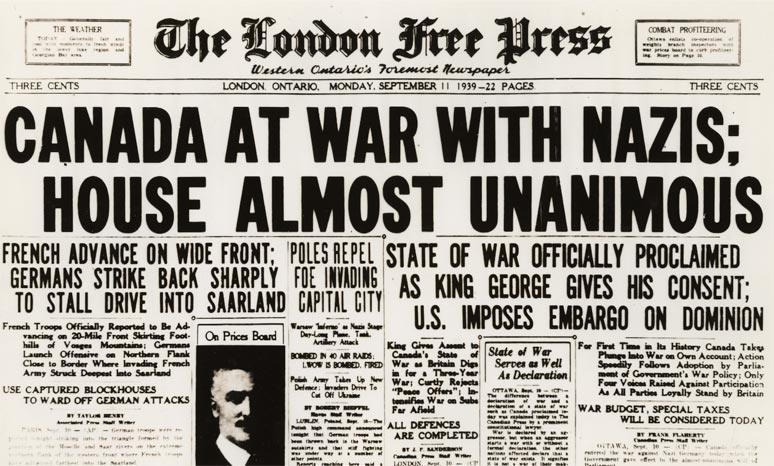
Britain was fortunate in World War 2 in that it received much needed help from abroad in materiel and in military manpower from abroad. the British Empire committed many troops on all fighting fronts to help defeat the Axis.
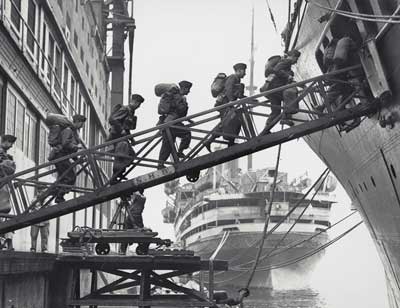
On the 23rd December 1939 7,500 Canadian troops arrived in Britain. This was the beginning, 629,000 Canadian fought in the warhttp://www.bbc.co.uk/history/ww2peopleswar/timeline/factfiles/nonflash/a6651218.shtml, A total of 8,586,000 from all the Dominions would fight in World War 2 including 413,000 from Australia and 1,440,500 from India. The troops from other countries served where the British army was fighting, The Canadian Navy provided the lion's share of escorts for Atlantic convoys, and the Indian army provided many reinforcements to fight against the Japanese in the Far East.
Bevin Boys at a Durham Pit In World War 2, found at:http://www.ww2incolor.com/d/682674-2/bevinboysdurham2
In the Second World War many people, especially men, were prevented from joining the armed forces because they were more valuable to the war effort staying in their civilian roles. Coal miners, dockers, farmers and farm workers, railway workers, armaments workers, railway workers, police and doctors. In many cases being in a reserved occupation did not mean you were safe. Many factories were bombed, docks especially were subject to many attacks by the Luftwaffe including Hull, Sunderland, Newcastle, Swansea, Portsmouth, London, Southampton etc.
In 1938 a Schedule Of Reserved Occupation Act was passed by Parliament, to ensure labour shortages did not affect industry, as they had done in the First World War.
Due to a shortage of coal miners, a conscription scheme was established and the miners became known as 'Bevin Boys'. Nearly 22,000 Bevin Boys worked at the coal face during the war.