Britain was fortunate in World War 2 in that it received much needed help from abroad in materiel and in military manpower from abroad. the British Empire committed many troops on all fighting fronts to help defeat the Axis.
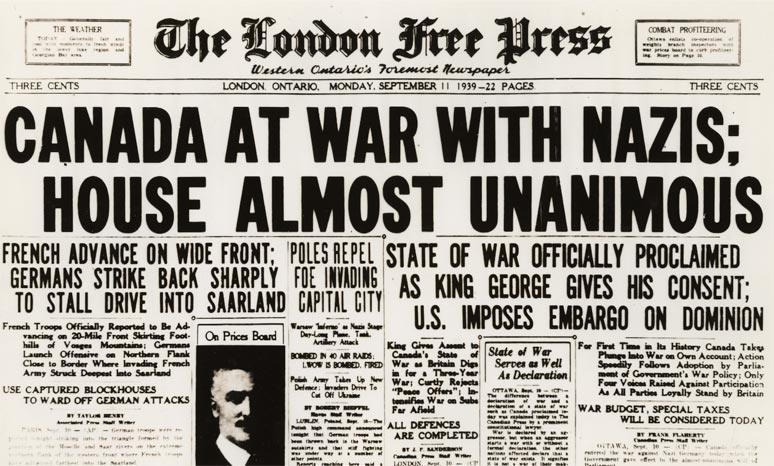
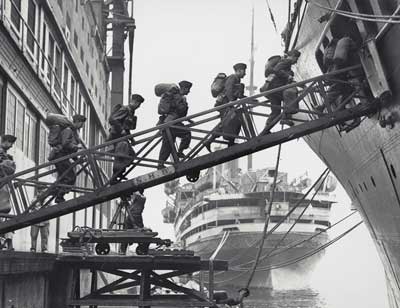
On the 23rd December 1939 7,500 Canadian troops arrived in Britain. This was the beginning, 629,000 Canadian fought in the warhttp://www.bbc.co.uk/history/ww2peopleswar/timeline/factfiles/nonflash/a6651218.shtml, A total of 8,586,000 from all the Dominions would fight in World War 2 including 413,000 from Australia and 1,440,500 from India. The troops from other countries served where the British army was fighting, The Canadian Navy provided the lion's share of escorts for Atlantic convoys, and the Indian army provided many reinforcements to fight against the Japanese in the Far East.
Bevin Boys at a Durham Pit In World War 2, found at:http://www.ww2incolor.com/d/682674-2/bevinboysdurham2
In the Second World War many people, especially men, were prevented from joining the armed forces because they were more valuable to the war effort staying in their civilian roles. Coal miners, dockers, farmers and farm workers, railway workers, armaments workers, railway workers, police and doctors. In many cases being in a reserved occupation did not mean you were safe. Many factories were bombed, docks especially were subject to many attacks by the Luftwaffe including Hull, Sunderland, Newcastle, Swansea, Portsmouth, London, Southampton etc.
In 1938 a Schedule Of Reserved Occupation Act was passed by Parliament, to ensure labour shortages did not affect industry, as they had done in the First World War.
Due to a shortage of coal miners, a conscription scheme was established and the miners became known as 'Bevin Boys'. Nearly 22,000 Bevin Boys worked at the coal face during the war.
The farming industry in Britain during the Second World War underwent a complete upheaval. It was necessary for the government to control what farmers grew or what livestock they kept to ensure maximum productivity from the land. I have included part of my Special Study for my dissertation from my B.A in history from 2008 for this.
Under the Defence of The Realm Act
which was passed just before the outbreak of hostilities[1],
the Ministry of Agriculture had the power to
Preserve and
maintain agricultural land solely for the production of food, to control by
order, the cultivation, management and use of land in order to secure maximum
production of food from the farms; to terminate any tenancy of agricultural
land where it is considered that the land is being neglected or badly
cultivated; to introduce special measures for the determination of birds,
rabbits, deer, vermin and pests.[2]
[1] A. Wilt, Food for
War, Agriculture and Rearmament in Britain before the Second World War, p.186.
[2] J.Martin, The Development of Modern Agriculture,
British Farming Since 1931,p.38.
The Ministry now
had much more power to meet the demands of a hungry populace that would soon
have to rely on food that was largely home produced, as was forecast, quite
accurately that importation of food would decline. Many of the farmers who had
to produce this food had to change their methods of farming. They had to
produce in greater quantities food that was rich in carbohydrates such as
potatoes, or foodstuffs that were too bulky or fragile that would not take up
valuable shipping space, so as not to
rely too heavily on importation. [1]
With reference to
the title of this Special Study, like the Great War the Second World War was a
time of affluence for many farmers, particularly in the arable districts of
England. For example, prices of wheat in
1939 per cwt for England and Wales were 5 shillings, by 1945 this had risen to
14s 5d. Barley in the same period rose from 8s 10d to 24s 5d, and oats rose
from 6s 11d to 16s 5d[2]. farmers were heavily subsidised by the
Ministry of Food, who bought goods from farmers at higher rates, whilst selling
them to the public at lower rates, the shortfall being made up by the Treasury.
Crops such as wheat however, were acquired by the government cheaper than in
times of peace[3].This
system was , on 26th November
1940 confirmed to stay in place whilst hostilities were taking place and for
one year after they ended[4].
Government policy
was critical in ensuring an increase in productivity. Like the First World War,
War Agricultural Executive Committees There were eventually sixty-one
committees established in England and Wales[5],which
came to be known as ‘War Ags’. The members of the War Ags included local
farmers, members of the Women’s Institute and had the power to take farms away
from farmers who were considered to be farming inefficiently. They also had to
ensure the government policy of ploughing up more land was implemented. The War
Ags had the power to tell people which fields were cultivated and had a pool of
labour and machinery to work the land themselves. They also encouraged more modernisation, which
resulted in more efficiency and greater production.
Livestock
The inportation of
feedstuffs was less due to the problems
in shipping. This did not prevent the
encouragement of higher yields in dairy cows. More small scale farmers began to
produce milk, premium payments were given to the first 1514 litres of milk
produced per month[6]. Other
small scale production of livestock was
encouraged with the introduction of Pig and Poultry Clubs[7]
Domestic poultry keepers did not have restrictions placed upon them like large
scale producers regarding rationing controls. The Small Pig Keepers Council, an
organisation founded by the Ministry of Agriculture encouraged anyone with
space to keep a pig and feed it on household waste. There is little evidence to
suggest that these smallholders and people in towns were ever an economic
threat to full-time farmers, but whilst the war was taking place, helped to
supplement a diet that was rationed.
Hill farmers were
dealt with separately for the first time. In 1940 subsidies were paid at the
equivalent of 12.5p per head per hill ewe, by 1942 this had risen to 40p[8]. A
committee was formed in 1941-1942 for England and Wales to review the long term
future of hill faming, a minimum of four hundred ewes was required for
full-time status.
Farm Workers
The government had
the foresight to ensure that farmworkers were not as scarce as they had been in
the First World War. This was achieved by farming being declared a reserved
occupation, if any male farm worker wanted to join the forces or have an
alternative occupation, i.e. construction, a replacement had to be found before
he was allowed to leave his job on the farm.
This came under the Restrictions of Engagements order in June 1940[9].
Martin claims that anyone who wanted to leave agriculture for the forces or
another occupation would have done so[10],
as the war was nine months old when this order became effective. Howkins states
that an estimated fifty thousand farm workers were lost to the armed forces
prior to the Restrictions of Engagements Order. The total number of farm
workers in 1939 (seasonal, part and full-time) were six hundred and seven
thousand in England and Wales, for 1940 the number had risen to six hundred and
eight thousand[11].By 1945
the number had increased to seven hundred and seventy thousand[12].
This was due to the recruitment campaign by the government to organisations
such as the Women’s Land Army. This had varied success, in England some
encountered sexism, and many were appalled at the conditions they were expected
to work and live in. Sackville West, cited in The Peoples War states that women nearly equalled the abilities of
their male counterpart in tasks such as milking, turning hay and lifting peas,
but other more demanding tasks it required three women to take the place of two
men[13].
The
unemployed from the towns and cities
were also put to work on farms, as were conscientious objectors[14].
Prisoners of War also took part, by 1945 there were 57,763 working on farms in
England and Wales[15],
the obvious advantage being that they did not need paying, the incentive to
them being a healthier and more stimulating environment than being stuck behind
the barbed wire for the duration of the war.
Wages, always an
issue with farmworkers, were increased as the value of farm work was recognised
by the government as being essential to the war effort, a good wage being an
incentive to stay on farms.. Estimated wages in 1940/1941 for the basic wage of
an adult male were 48sh 5d per week in England and Wales, by 1944/1945 this had
increased to over 67 shillings[16].
Due to the security felt by farmworkers because of the shortage of skilled
manpower, union membership of the National Union of Farmworkers rose to
100,000, three times what it had been prior to the war[17].
Machinery
More tractors and
modern implements were as essential to the increased productivity of the land
as the farmworkers mentioned above. The horse began to fall out of favour as
there was more land cultivation to be undertaken, but the decline was not
rapid, there being over six hundred thousand in the whole of Great Britian in
1938[18].In
1946 this had fallen to just over five hundred thousand. The tractor, faster
than the horse and becoming more reliable was still outnumbered by the horse,
there being around one hundred thousand in England and Wales in 1940[19].
This was a considerable increase
considering there were only around fifty six thousand in Great Britain in 1939[20].
Many farmers were saved the cost of buying a tractor because of the help
offered by the War Agricultural Executive Committees mentioned previously.
Farmers had priority in the allocation of machinery, this would not have
happened if it had not been for the war, the provision of machinery was a great
help in modernising farming in England.
.
To conclude, the Second World War
was a turning point in English agriculture. Through government intervention of
the way farmers cultivated their land and subsidised pricing, agriculture
became more productive. The agricultural industry was also fortunate to receive
a priority in machinery allocation, a godsend for farmers wishing to modernise.
This was essential due to the threat of merchant shipping during the Battle of
the Atlantic, shipping space also being in short supply. Farmworkers benefited
enormously, their efforts being recognised as valuable to the well being of the
country. Government policy worked with notable success, the Women’s Land Army
making a significant contribution, as did Prisoners-of War. Without the
preparations for increased production, the country would have been, without
doubt, short of food. Also like the First World War, farmers were able to make
a comfortable living in most cases, and although rationing was in place for
most of the war, farmers were able to access food much easier than people
living in urban England.
I hope the sources above prove useful, the BBC made an excellent TV series recreating life in wartime Britain on a farm, you can find a link to their webpage Wartime Farm BBC Wartime Farm
and the TV series is on Youtube
This is one of the best blog posts I have seen because there is so much original material in the slide show. Fellow Blogger Don Christenson has put together some brilliant material about his father Lt Don Christenson who was a B-17 pilot in the Second World War. His latest blog post is a slide show about his Father's early life, trips to Denmark and Sweden, his engagement to his Mother, joining the Police Dept and the U.S.A.A.F. Please click on the link and see for yourselves.
Most people who enjoy watching the repeats of Dad's Army on #BBC2 on Saturdays, will probably have an image in their minds that the ARP or Air raid Warden in World War 2, was something of a pest, somebody like the character Hodges who let the power go to his head, ordering people about. In some cases this might have been true (Hodges was based on a real Air Raid Warden) but the Air Raid Warden was an authority figure the government could not do without, they had to make sure the blackout regulations were adhered to.
In the hours of darkness the A.R.W had to make sure homes were blacked out - not showing any light from their homes whatsoever. This was to make the Luftwaffe's bombing less accurate. After bombing raids Air Raid Wardens helped dig out survivors. Air Raid Wardens also issued fines if regulations weren't followed, this did not make them popular but was a necessary deterrent. In exceptional cases people could be imprisoned.
The video below shows what the Blitz was like in British cities during the war.
This is a brilliant blog about a B-17 Crew in #WW2
Carrying Fire: Being There: It was a sober arrival at Nuthampstead for Don and the other replacement crews on Februry 1, 1945. Everything was different. First ...
Allied bombing in World War 2 has been a subject for controversy for many years. It has been a victim of criticism by many, the massive air raids against Dresden, Cologne, Hamburg, Berlin, Lubeck Hanover, Augsburg just to name a few which, for the civilians living there were catastrophic.
Have the Allied Nations from the Second World War forgotten the carnage caused by the German forces over most of Europe and the Soviet Union? The Allied nations were fighting to end the war, so its troops could go home after Hirohito, Mussolini and Hitler had all been defeated.
After June 1940 after France had surrendered, and until September 1943 when the Allies invaded Italy, the air war which the Allies concentrated their efforts was vital to winning the war, even at such a huge cost in men and aircraft. Britain was suffering in the blitz on its cities, and had to retaliate. The development of 4 engined heavy bombers like the Halifax and Lancaster proved invaluable.1000 bomber raids followed on German cities, when the U.S.A. entered the war in 1941, its air force joined the R.A.F in bombing. It suffered heavy losses as its bombers flew in daylight, the Schweinfurt Raid being infamous for losing 60 aircraft over enemy territory.
We appear to have forgotten WHY we were bombing Germany, it is because we were at war with the Axis powers. I am sure the British and European peoples who suffered at the hands of the Luftwaffe, and took cover whilst German bombs fell on them, do not say Allied bombing was wrong.
The Soviet Union was at war with Germany from June 22nd 1941, 20 million of its citizens died by various causes. Stalin was no saint and had gone overboard with purging his own people, but cities like Sevastopol, Kiev, Stalingrad, Moscow and Leningrad were heavily bombed by the Luftwaffe. I have not heard recently of any Russians speaking out against the Allied bombing. As previously stated, bombing was the only way we could fight Germany in Europe until D-day in 1944. We need to remember we were at war,and also trying to win it. Like most people I am very grateful to Allied aircrews for their sacrifices. Thanks RCAF, RAAF, RAF, USAAF for helping us win the war.
Article first published in the Daily Telegraph, Sept 8, 1939.
Petrol ration books are available to-day on application at post offices or local taxation offices, but they cannot be used before Sept. 16 when the rationing system comes into force.
After that date no petrol for any purpose will be obtainable except against ration coupons.
Applicants who must produce the car registration book, will receive from the issuing clerk, two ration books one marked “first month” and one marked “second month” containing coupons for the quantity allowed them according to the rating of the car as shown in the registration book.
Each coupon represents one unit, which for the present represents one gallon, but the unit may be changed later.
Car owners should not that ration books are only valid during the period for which they are issued – the first between Sept. 16 and Oct. 15 and the second between Oct. 16 and Nov. 15. In other words, you cannot hoard your coupons.
Extra rations
Persons requiring more than the minimum ration represented by the books should apply to the Divisional Petroleum Officer for the area which the petrol is required. The names and addresses of these will be issued in a day or two.
A form of application for those who want motor spirit for stationary engines and purposes other than for use in road or agricultural vehicles is also to be had at post offices.
Commercial vehicle operators will also be unable to obtain motor spirit after Sept. 16 except on rations. They will get supplies through their group organisers.
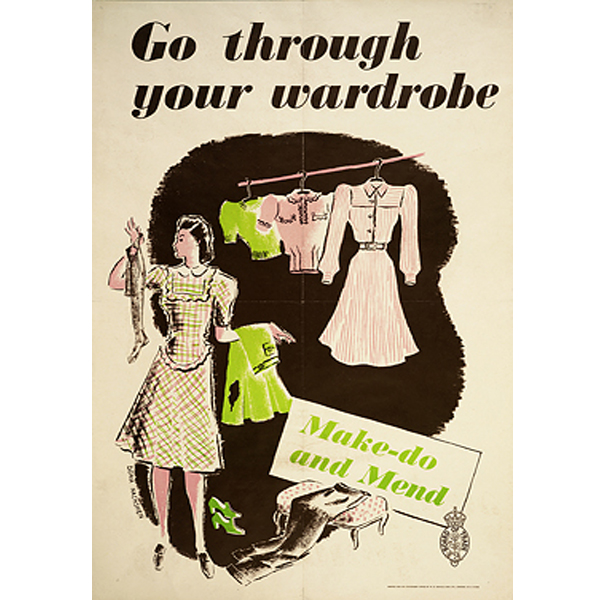
Other fuels were also rationed, if they weren't people were encouraged to save energy as shown by the propaganda poster above. Make use of the daylight, cook one - pot meals, don't poke your fire, finish putting coal on your fire an hour before bed were all tips designed to save valuable resources. The Brtish government printed many pamphlets, some have been republished like this Make Do And Mend book
Continuing from my last post, many things were in short supply during the Second World War including clothing. Britain, being an island, was dependent on imports to feed its population. Shipping space was prioritised for arms and ammunition, oil, and other equipment that Britain needed to keep fighting Germany and the Axis. As the war went on it got worse due to Britain being alone after June 1940, when France surrendered. Bananas, oranges and other imported foodstuffs soon disappeared from shop shelves. Eggs became scarce, powdered eggs became common in people's kitchens. Meat was also scarce, the government controlling how farmers farmed their land as grain was needed for bread making not for feeding as many animals as before the war. Spam was imported from the United States, and people often started a pig co-operative, feeding food waste to a pig and sharing it when it was slaughtered.
There were many shortages in Britain during the Second World War. Most everyday items were rationed; clothes, foodstuffs, fuel (heating oil, petrol, coal, coke). People learnt to 'make do and mend' when clothes wore out and became adept at improvising.
Clothes manufacture concentrated on making uniforms, the British Forces uniforms were made mainly of wool due to cotton having to be imported (remember this was before synthetic fibres).
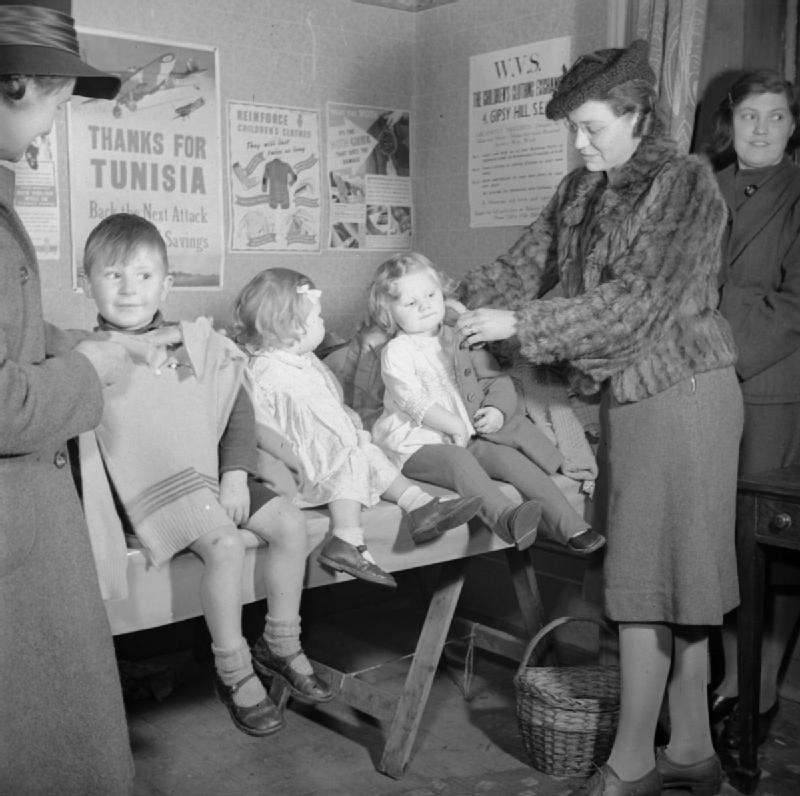
New clothes for civilians were of a limited range and you needed clothing coupons from your ration book to buy them, so you had to choose wisely. The Women's Voluntary Service ran a clothing exchange, you were given points to use when you brought old clothes in.